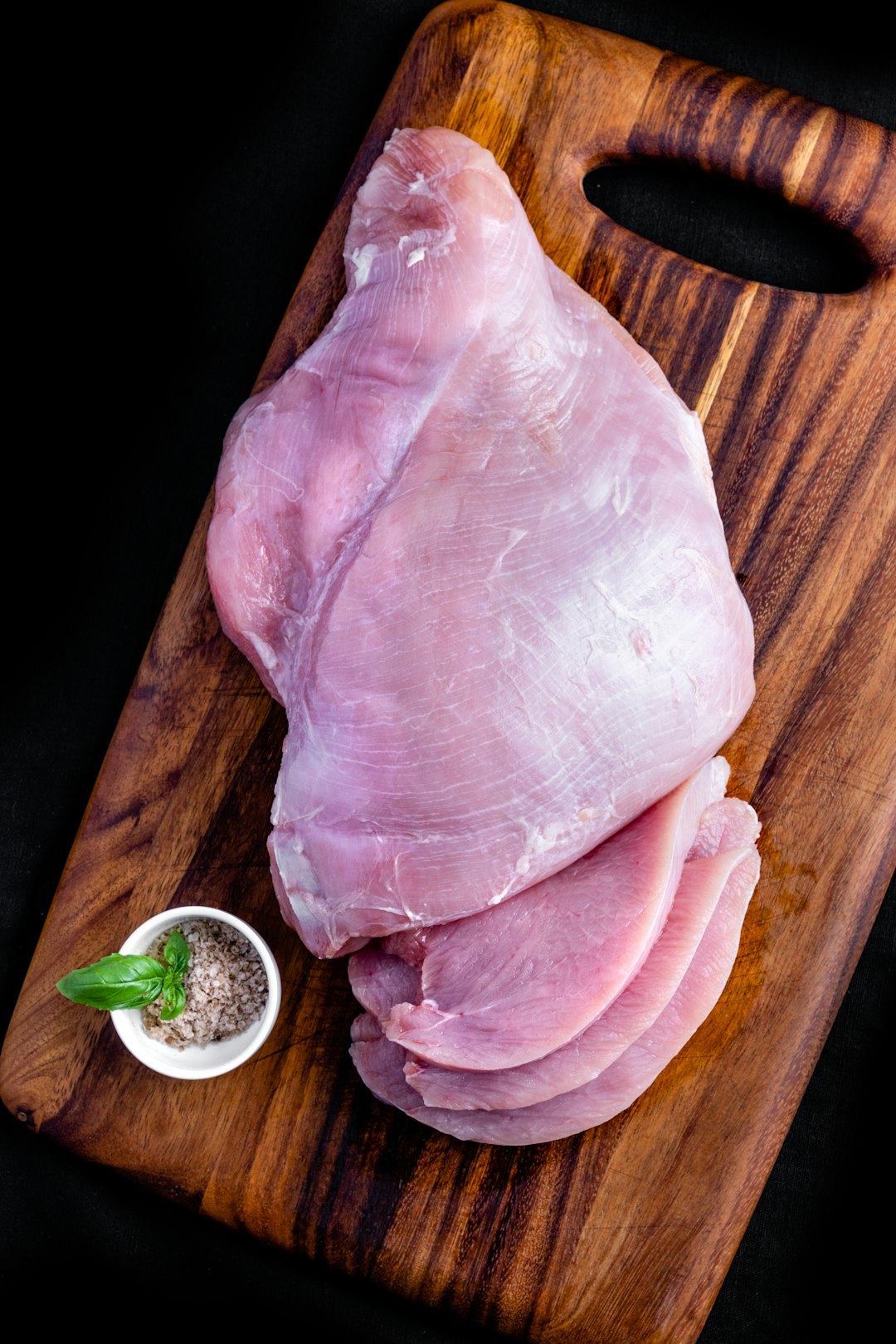
Frozen poultry · Brazil origin · ASWP export
Frozen Chicken — 9 Cuts Available
Whole chicken, breast, leg, wing, paw, foot, gizzard, neck — IQF frozen · Halal certified · CIF all ASWP ports
IQF frozenHalal availableCIF ASWPBrazil origin
Nécessaires au fonctionnement du site (popup newsletter, préférences). Ne peuvent pas être désactivés.
Audience measurement anonymisée — pages visitées, durée de session, type d'appareil. Aucune donnée publicitaire.
Fonts loaded from Google servers (Playfair Display, Source Sans 3).
Whole chicken, breast, leg, wing, paw, foot, gizzard, neck — IQF frozen · Halal certified · CIF all ASWP ports
| Species | Chicken (Gallus gallus domesticus) — commercial breed |
| Freezing method | IQF (individually quick frozen) · temperature ≤ −18°C |
| Cuts available | Whole chicken · breast · boneless breast · leg · wing · paw · foot · gizzard · neck |
| Whole chicken weight | 0.8 to 1.8 kg per piece |
| Origin | Brazil (Paraná, Santa Catarina, Rio Grande do Sul) |
| Halal certification | Available on request — recognised bodies (SISBRASIL, IDH) |
| Packaging | Cartons of 10 to 20 kg · pallets 20 to 25 tonnes · reefer container at −18°C |
| Minimum volume | One 40ft reefer container (approx. 20 MT depending on cut) |
| Incoterm | CIF — ASWP destination (any safe world port) |
| Payment | SBLC (standby letter of credit) · DLC (documentary letter of credit) |
Brazil has been the world's largest exporter of chicken meat since 2004, accounting for roughly 35 to 40% of international trade and shipping to some 150 countries. The position rests on exceptional natural conditions — low-cost soy and maize for feed, land availability, competitive labour — and on heavy investment in abattoirs certified for the most demanding markets, including the European Union, Saudi Arabia and Japan.
The main producing states are Paraná, Santa Catarina and Rio Grande do Sul in southern Brazil, home to the largest integrators in the world: BRF (Sadia, Perdigão), JBS (Seara) and Aurora Alimentos.
IQF, individually quick frozen, is rapid individual freezing at around −40°C using blast air or liquid nitrogen. Each piece is frozen separately before being cased, which preserves the cell structure, prevents large ice crystals forming and delivers texture and nutritional quality close to fresh on defrosting. It is the international standard for export poultry cuts — and worth confirming on any offer, since block-frozen product behaves very differently in a kitchen.
Eviscerated whole chicken is the versatile reference of Brazilian export. The 0.8–1.8 kg sizing matches the standards of contract catering and of African and Middle Eastern markets. It ships ready to cook, without offal, with or without the neck depending on destination. Demand is strongest in West Africa and South-East Asia.
Bone-in, skin-on breast is the most requested cut in contract catering and retail across importing countries. Its culinary versatility — grilling, roasting, sautéing — and high lean protein content make it a core reference. Demand is particularly strong in the Middle East, where it often represents a large share of imported volumes.
Boneless, skinless breast fillet is the premium product of the range, destined for food manufacturing — breading, nuggets, poultry charcuterie — and for upmarket restaurants. Its ease of preparation and absence of waste justify the premium over bone-in breast. Worth calculating on yield rather than headline price: the boneless product often costs less per plated portion despite the higher price per kilo.
Leg with drumstick is the most popular cut in African markets thanks to its excellent hold during cooking, its pronounced flavour and its accessible price. Consumption is heavy in West Africa — Nigeria, Ghana, Côte d'Ivoire — in central Africa and in Cuba. It is frequently the entry product for an importer starting on this market.
The whole three-segment wing is much appreciated in Asia — China, Hong Kong, Vietnam — and in Latin America for everyday cooking. In the Middle East, wings are in strong demand for quick service and barbecue. Sauced chicken wings are also a fast-growing segment in European Asian grocery.
Chicken paws (metatarsals) are the flagship of Brazilian export to China and South-East Asia, where they are a traditional delicacy served in dim sum and stews. China imports very large volumes annually. Little valued on the Brazilian domestic market, the product commands strong export prices on the back of Asian demand.
Chicken feet — complete digits and metatarsals — are distinct from paws in export nomenclature, a distinction worth checking on any contract since the two are frequently confused. Consumption is heavy in sub-Saharan Africa (South Africa, Zimbabwe, Angola) and in Asia, where they go into traditional broths and stews. Among the most accessible prices in the range, which makes them strategic for lower purchasing-power markets.
The gizzard is the muscular stomach of the bird, prized in West Africa (Senegal, Côte d'Ivoire, Ghana) and Latin America for its firm texture and pronounced taste. It is eaten grilled, on skewers or in sauce, with demand peaking during Ramadan and festive periods.
Necks are used mainly for stocks, broths and traditional preparations. Low unit value, but they travel well in mixed containers and complete a range at minimal cost.